
Aug
What raises osteoporosis risk, and what actually helps bones stay strong?
Osteoporosis means bones get thinner and break more easily. Plenty of people only think about it after a scan, or after a parent’s fracture. By then the skeleton has already been under pressure for years.
Bones are not a finished job. If food does not supply enough calcium, the body still gets it by taking it from teeth and bones. Absorption also drops as we age. Women are four times more likely to lose bone density than men, so the risk sits higher later in life, especially after menopause. Men are not in the clear. Too much coffee, fizzy drinks, smoking, heavy drinking, sitting still, and a plate heavy in sugar, refined carbs and meat all add to the load.
What raises osteoporosis risk
Age is the obvious one. The body absorbs calcium less well as the years go on. Being female raises the odds further. That is not meant as a scare. It is why women’s labelled doses on a calcium and magnesium capsule are higher than men’s.
Daily habits count as much as birthday. Too much coffee and carbonated drinks. Smoking. Heavy drinking. Almost no walking or other movement that loads the bones. An eating pattern that is heavy on acid-forming foods. None of those is a diagnosis on its own. Together they wear bone down. A capsule does not cancel cigarettes or a sofa habit. It is the mineral step when diet and years are already asking a lot of the skeleton.
Calcium is not the whole story
People often buy the biggest milligram number on a calcium bottle. The form matters more. Calcium citrate is used because the body absorbs it more readily than a cheap tablet bought only for a headline count. Magnesium sits with it: calcium contracts muscles, magnesium relaxes them. That pairing also matters for the heart and arteries, not only for teeth.
Vitamin D3 helps the body take calcium in. Vitamin K2, in the MK-7 form, helps send that calcium into bones and teeth instead of leaving it where it does not belong. Even in a sunny country, indoor work, clothing and sunscreen mean many adults still run short of vitamin D. Sunshine is not a reliable daily dose. Bone and back pain, muscle weakness, tiredness and frequent illness can sit alongside low vitamin D, but those signs are not a diagnosis on their own. A practitioner can check levels if you are unsure.
Products that help with this
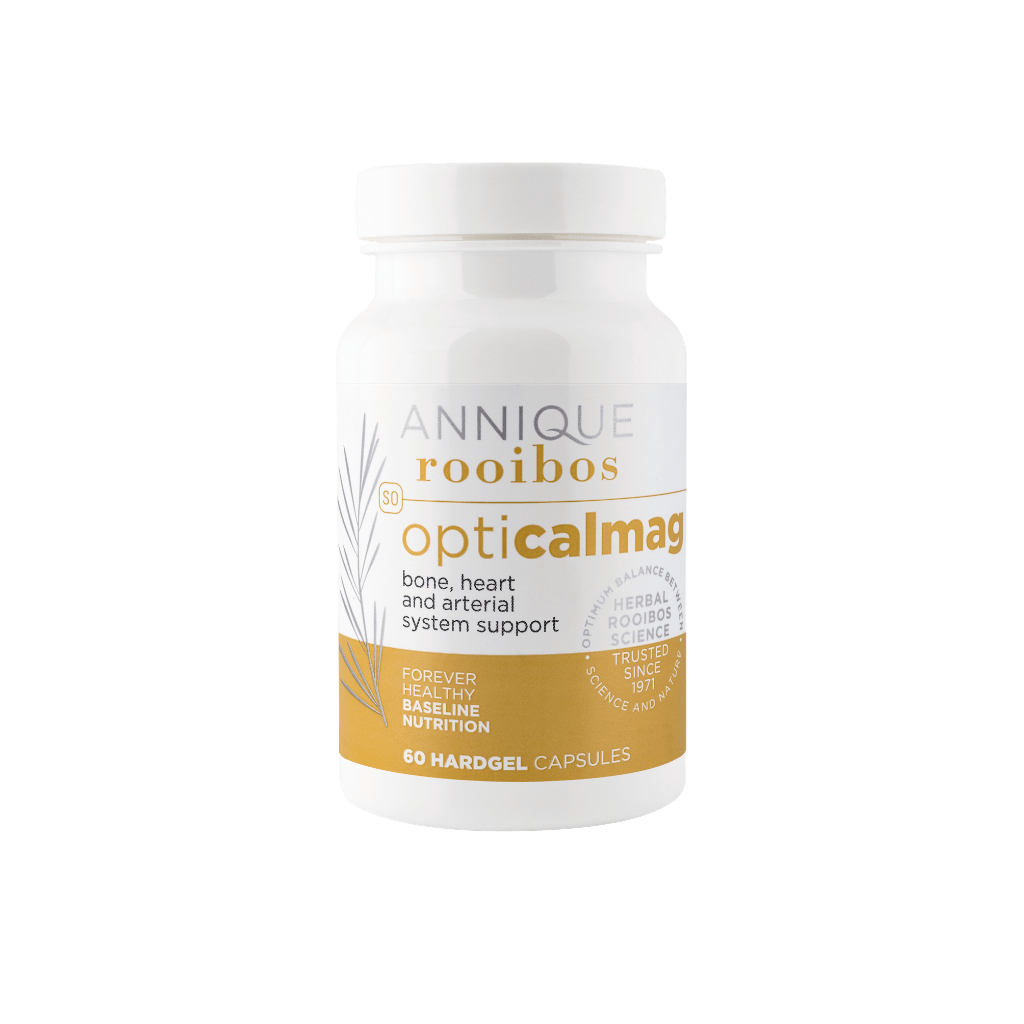
Start with OptiCalMag – 60 Capsules. It uses calcium citrate and magnesium citrate with vitamin D3, vitamin E and Green Rooibos extract. Take it in the evening. The labelled range is two to four capsules a day for women and one a day for men, or as a healthcare practitioner recommends. It is not for children.
Follow with Vitamin D3 & K2 – 30 tablets. One tablet after a morning meal supplies 1,000 IU of vitamin D3 with vitamin K2 (MK-7), selenium glycinate and Green Rooibos. OptiCalMag already includes a smaller amount of D3. This tablet is the dedicated D3 and K2 step beside the mineral capsule, not a second calcium product. Suitable from age 12. Suitable for vegans and vegetarians.
What to do next
Keep the minerals with the evening routine and the D3 and K2 tablet with breakfast. Walk if you can. Cut back on fizzy drinks and extra coffee if those are daily. If you take other medicines, are pregnant, or a practitioner has already set a vitamin D dose, ask before you add another tablet. Product pages have the full how-to and warnings. This article is the background, not a substitute for medical advice.
