
Sep
Not sure if your skin is oily, dry, combination or normal? Here’s how to tell — and what changes once you know.
Most people picked their moisturiser once, years ago, and never really asked whether it still matches their skin. Skin type isn’t something you decide once and forget — it’s something you can check using a few plain signs: how your skin feels an hour after washing, where it gets shiny, and whether it changes with the seasons.
Getting this right matters more than it sounds. The wrong routine for your skin type can mean a moisturiser that feels too heavy, a cleanser that leaves your face tight, or breakouts that never quite clear up. None of that means your skin is difficult to work with — it usually just means the products weren’t matched to what your skin actually needs.
What Normal, Combination, Oily and Dry Skin Actually Look Like
Normal skin is genuinely low-maintenance: oil and moisture stay balanced, pores are barely visible, and breakouts are rare. It still needs daily care, but it rarely misbehaves. Combination skin is the one most people have without recognising it — it runs oilier through the forehead, nose and chin, while the cheeks stay drier or closer to normal. If your forehead shines by midday but your cheeks feel fine, or even tight, that’s combination, not oily.
Oily and problem-prone skin produces more surface oil across the whole face, not just the T-zone, and tends to show up as visible shine, blackheads, enlarged pores and regular breakouts. Dry and dehydrated skin sits at the other end — it can feel tight soon after cleansing, look dull rather than glowing, and show fine lines more easily once the day’s moisture has worn off. Dryness and dehydration aren’t quite the same thing, but the everyday fix is similar: richer, more consistent hydration.
Your Skin Type Can Shift With the Seasons
Skin type isn’t fixed for life, and it isn’t even fixed for the year. Combination and normal skin in particular tend to run oilier in summer and drier in winter, which is exactly why a routine that worked in January can feel wrong by July. If a moisturiser that used to suit you suddenly feels too rich or too light, seasonal change — not a bad product — is usually why.
The practical habit is to check in with your skin every few months instead of assuming it stays the same. A quick read is simple: blot your T-zone by early afternoon, notice how your cheeks feel by evening, and pay attention to whether anything has changed since you last restocked.
Products that help with this
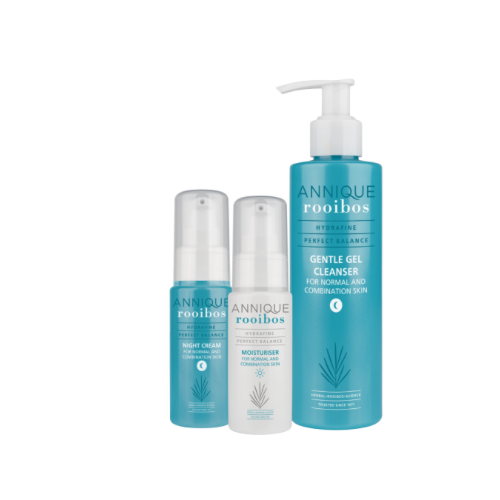
Start with the Hydrafine Combo. It bundles a cleanser, moisturiser and night cream built specifically for normal and combination skin, using Green Rooibos, Marinematt and Allantoin to hydrate drier areas while keeping oil in check through the T-zone.
If your skin runs oily or breaks out easily, the Face Facts Combo covers the routine in one go — a Gel Cleanser, Charcoal Cleansing Soap Bar, Moisturiser SPF 8 and a targeted Spotless Pimple Treatment, built around Green Rooibos and Tea Tree Oil for problem-prone skin.
For dry, dehydrated or mature skin, the Moisture Duo pairs a lightweight hyaluronic acid serum for the morning with a richer hyaluronic acid night cream, so skin gets hydration support at both ends of the day rather than leaving one heavier cream to do all the work.
Choosing Where to Start
If you’re switching routines, do it one step at a time rather than replacing everything at once — start with the cleanser or moisturiser that matches what you’ve noticed about your own skin, and give it a few weeks before judging the result. If your skin sits between two types, such as normal with the odd oily patch, it’s fine to lean toward the combo that matches your more noticeable concern and adjust from there as the seasons change.
